Water Heater Anode Rods And Flushing: Maintenance For Soft-Water Homes
Two cheap maintenance jobs, a yearly flush and an anode rod check, do more for a tank heater than anything else.
- Sourced guidance
- High Point area
- Updated October 2026
Flush The Tank Yearly, Check The Rod Every Few Years
A tank water heater has a steel shell, a glass lining and a sacrificial anode rod. The rod corrodes so the tank does not. Sediment settles on the bottom and forces the heater to work harder. According to most manufacturer guidelines, you should flush the tank about once a year, and an anode rod check every few years is common advice.
Both are within reach of a careful homeowner, but they involve hot water, power or gas and heavy parts. If you are unsure at any step, stop and call a plumber.
What To Do Before You Touch The Water Heater
Hot water and electricity or gas make shortcuts dangerous.
- 1
Turn off power at the breaker for an electric heater, or set a gas heater's control to pilot or off.
- 2
Close the cold water supply valve above the tank.
- 3
Wait for the water to cool, since tank water can scald.
- 4
Attach a hose to the drain valve and run it to a floor drain or outdoors.
- 5
Open a hot tap in the house so air can enter as the tank drains.
- 6
If you smell gas at any time, leave the house and call 911 or the gas utility.
How To Flush A Tank Water Heater
- 1
Drain
Open the drain valve and let the tank empty into the hose.
- 2
Flush
Briefly open the cold supply to stir the sediment, then drain again.
- 3
Close up
Close the drain valve, remove the hose and refill with the hot tap open.
- 4
Restore
When water runs steadily, close the tap and turn power or gas back on.
Heater Won't Drain Or Leaks After A Flush?
Call the 24/7 line. A stuck drain valve is a common reason to call a plumber.
Anode Rod Materials
The rod material depends on the water and on the heater's warranty terms.
| Material | Strength | Watch for |
|---|---|---|
| Magnesium | Protects well in most water | Wears faster, can smell in some water |
| Aluminum | Lasts longer in many installations | Some manufacturers limit its use |
| Aluminum-zinc | Designed to reduce odor | Check manufacturer guidance |
| Powered rod | Needs electricity, lasts longest | More expensive, requires power |
What Soft Water Changes About Maintenance
The City of High Point's published hardness readings run roughly 30 to 60 mg/L, which is soft. Scale builds slowly in that water, so the main reason to flush here is fine sediment from the supply, not limestone. A tank in a soft-water area can sometimes go longer between flushes, but a yearly check is still a good habit.
Soft water does not make the anode rod unnecessary. The rod still protects the tank, and a spent rod is one of the main reasons tanks fail. A rotten egg smell in hot water often points to a rod and bacteria reaction and can be fixed with a flush and a rod change.
When To Call A Plumber Instead
A rod can seize in the tank and need an impact wrench, and removing it needs headroom above the heater. Garage and crawlspace heaters in older houses often lack that space. A drain valve that clogs with sediment can also resist a flush.
If the heater is past about 12 years old, a leak or rust at the bottom is a sign to stop maintenance and price a new unit. Read emergency water heater repair for common failures, and water heater replacement if the tank is done. Owners of on-demand units should see tankless water heater service, since those need a different flush.
Help Beyond High Point
Maintenance and repair visits are available in Archdale and the other towns around High Point. Tell the dispatcher the tank's age and whether it sits in a garage or a closet, since both affect how the visit goes.
Tools And Time You Will Need
A flush needs a garden hose, a bucket, a screwdriver or valve key for the drain, and about an hour. An anode rod swap needs a large socket, often one and one-sixteenth inches, a breaker bar, thread tape and clearance above the heater to pull the rod out. Flexible rods help where headroom is tight.
If the socket will not budge the rod, stop. Forcing it can damage the tank fittings, and a seized rod is a good reason to call a plumber.
Common Maintenance Mistakes
The most common error is leaving the power on while the tank is empty, which burns out electric elements in seconds. Others are forgetting to open a hot tap so the tank can drain, restoring power before the tank is full and over-tightening the drain valve until it cracks.
A gas heater needs its control set to pilot or off during service. Never relight a pilot if you smell gas. Reusing old thread tape or skipping it on the rod threads invites a slow leak.
How To Tell A Spent Anode Rod
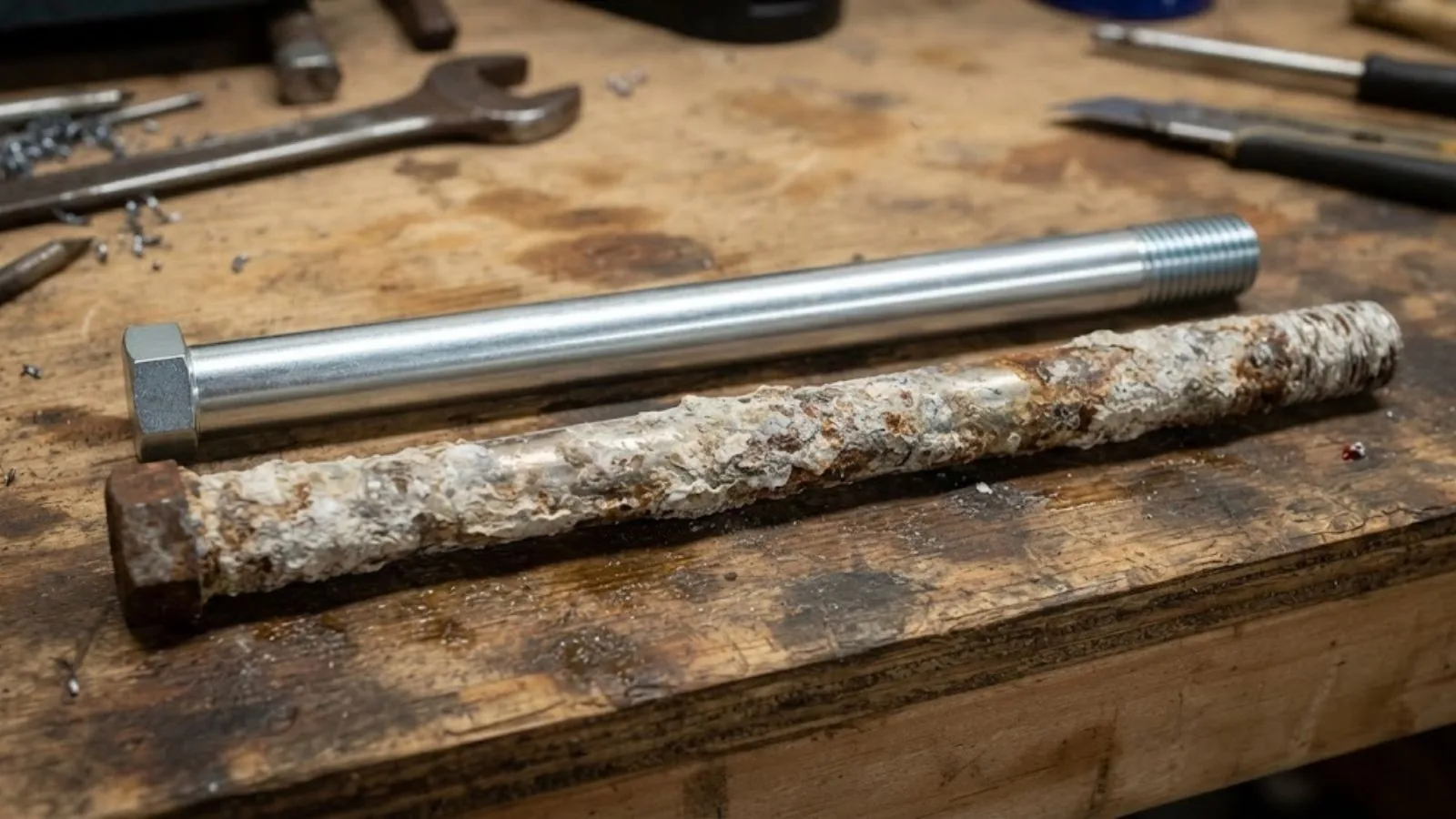
A healthy rod is thick and mostly intact. A spent rod looks thin, pitted or reduced to the steel core wire, often with chunks missing. If more than half the coating is gone, or the core wire shows over a long stretch, replace it.
Check the rod about every three to five years, sooner if you notice a sulfur smell. A new rod is far cheaper than a new tank, and it is one of the few maintenance jobs that clearly extends life.
A Maintenance Schedule You Can Keep
Flush the tank once a year and put the date on a label on the heater. Check the anode rod every three to five years, and sooner if the water smells. Test the relief valve gently each year by lifting the lever briefly.
Add a note when the heater reaches ten years. At that point, start comparing replacement options so that a failure does not force a rushed choice.
Anode Rod And Flushing Questions
Most manufacturers recommend once a year. In soft-water areas the sediment is lighter, but a yearly flush still helps.
Check it every few years. If the rod is mostly eaten away or coated, replace it.
Bacteria can react with the anode rod and produce a sulfur smell. Flushing the tank and replacing the rod often fixes it.
No. Tankless units use isolation valves and a descaling solution. See the tankless service page.
It can be, with the power or gas off, the water cooled and a hose to a safe drain. If anything seems wrong, call a plumber.
Need a hand with the heater? Call now.
Call (336) 453-0472Heater Needs Help?
Call for water heater repair or replacement in High Point, Jamestown, Archdale, Trinity, Thomasville, Randleman or Greensboro.
Call (336) 453-0472