Flushable Wipes, Grease And Coffee Grounds: What Really Clogs A Drain
Most drain clogs trace to a short list of habits. Knowing them is the cheapest plumbing advice there is.
- Sourced guidance
- High Point area
- Updated October 2026
A Few Habits Cause Most Clogs
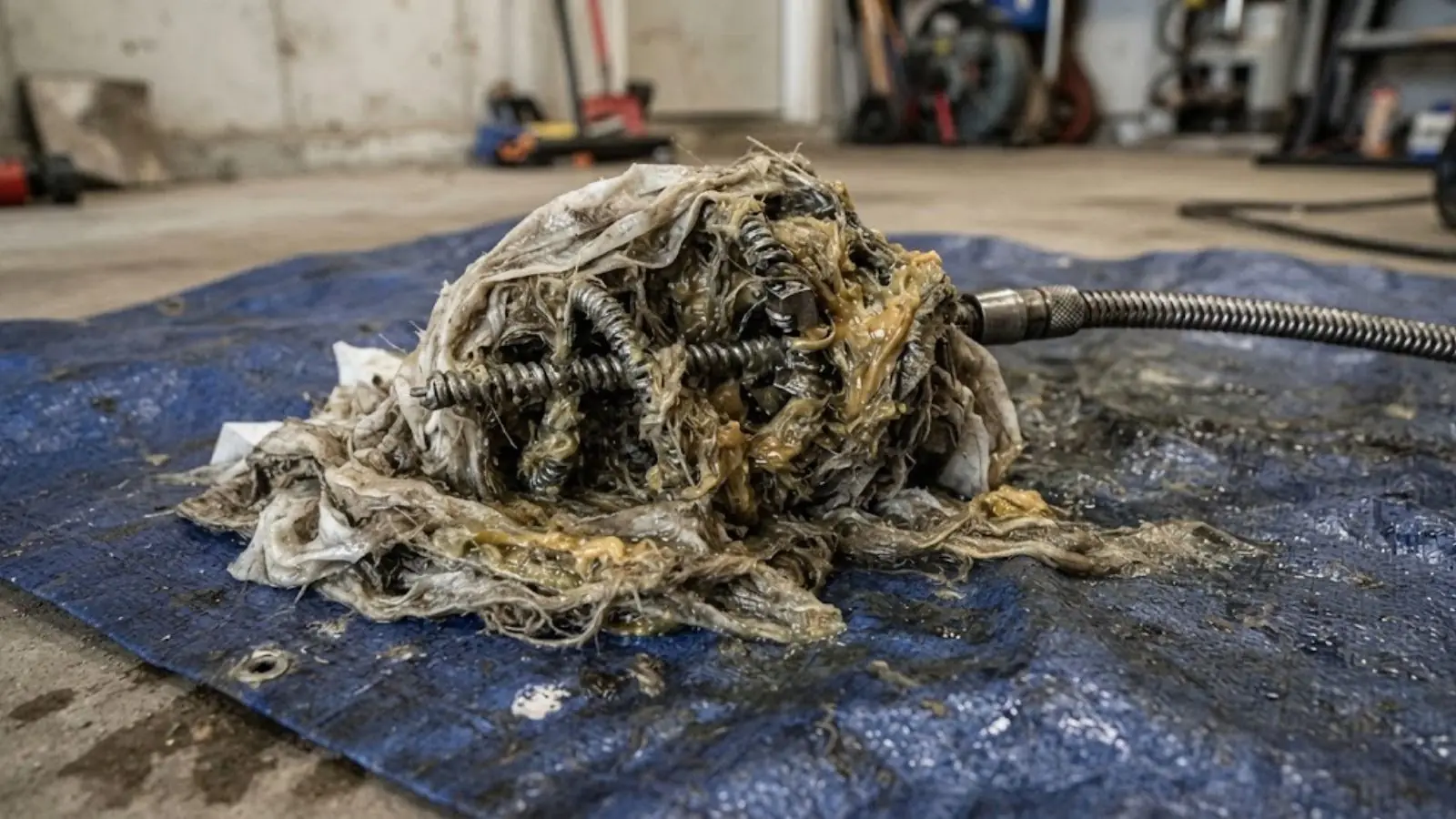
Plumbers see the same culprits again and again: wipes, cooking grease, hair, soap film, coffee grounds, fibrous food scraps and the occasional toy. A drain is a one-way pipe built for water and toilet paper, and everything else collects somewhere. The place it collects is usually a bend, a joint or a rough patch of old cast iron. This guide covers the worst offenders, what to do instead and when a clog is a sign of a deeper problem.
What Clogs Drains And What To Do Instead
The right habit depends on the fixture.
| Culprit | Where it clogs | Do this instead |
|---|---|---|
| Wipes labeled flushable | Toilet trap, main line, pumps | Put all wipes in the trash |
| Cooking grease and fat | Kitchen drain, then the main line | Let it cool, wipe, and trash it |
| Coffee grounds | Kitchen trap, forming sludge with grease | Compost or trash |
| Hair and soap scum | Shower and tub traps | Use a drain strainer |
| Fibrous food, rice and pasta | Disposal and kitchen line | Scrape plates into the trash |
| Paper towels and feminine products | Toilet and main line | Trash only |
Drain Won't Clear?
Call the 24/7 line. A main line clog does not clear on its own.
Why Flushable Wipes Are Not Flushable
Toilet paper breaks apart quickly in water. Most wipes, including those labeled flushable, hold together. They snag on rough pipe walls, catch more waste and form dense mats that can block a main line or a pump. Utilities across the country ask customers to flush only human waste and toilet paper.
A toilet that takes a wipe once may clear. The wipe then travels to a bend in the line and waits for company. If you have already flushed many, a camera inspection can show what is in the line.
Grease Does Not Stay Liquid
Hot fat flows down a drain easily, then cools in the pipe and sticks to the walls. Over months it narrows the line, catches food and turns into a hard coating. Hot water and dish soap push it a few feet farther down the line, which only delays the problem.
Pour cooled grease into a container and trash it. Wipe pans with a paper towel before washing. A kitchen line that clogs repeatedly may need professional hydro jetting to strip the buildup.
What To Do When A Drain Starts Slowing
Try the simple steps first.
- 1
Use a plunger on a single clogged fixture, with a tight seal and steady strokes.
- 2
Remove and clean the sink or tub stopper and the visible trap area.
- 3
Avoid chemical drain openers, which can sit in old pipe and make a plumber's job hazardous.
- 4
If several fixtures are slow or gurgle, stop and call. The main line is the issue.
- 5
If sewage is rising, stop all water use and call right away.
Why Old Triad Plumbing Clogs Faster
Cast-iron drains in houses from the Uptown Suburbs and the 1940s to 1980s ranches develop rough scale that catches debris. Clay laterals with root-filled joints do the same. A smooth new pipe forgives bad habits more than a rough old one does.
If clogs keep returning, the pipe may be the problem, not your habits. Drain cleaning service clears the line, a camera shows why, and garbage disposal repair helps if the disposal is part of the chain. Homeowners in Trinity on septic should be extra careful, since solids fill the tank faster.
Kitchen Habits That Protect Your Lines
Scrape plates and pans into the trash before washing. Wipe greasy pans with a paper towel. Keep a small container for cooled fat and throw it away when full. Use a sink strainer to catch food scraps, and run cold water briefly when you use a garbage disposal.
Rinsing a pan with hot water does not solve the grease problem. The fat travels down the line and cools. Over time the coating narrows the pipe, and a plumber has to scour it off with a jetter.
Bathroom Habits And Septic Homes
Only toilet paper and human waste belong in the toilet. Wipes of any kind, cotton swabs, dental floss, hair and feminine products belong in the trash. A small trash can with a lid near the toilet makes that easy.
Septic owners have another reason to be careful. Solids fill the tank faster, and wipes can clog the outlet filter or the pump. According to Guilford County Environmental Health, septic owners should keep chemicals, cleaning solutions and grease out of the system.
Teaching Kids, Guests And Tenants
Most clogs start with someone who did not know. A small sign in the bathroom, a lidded trash can and a short note for guests and tenants prevent more calls than any product. Children flush toys, and visitors flush wipes, so make the right habit the easy one.
Landlords can add a line to the lease about what may be flushed. Short-term hosts can post a brief house guide with the shutoff location and the trash rule. A few lines of instruction are far cheaper than a service call.
When Habits Are Not Enough
If you have changed your habits and drains still clog, the line itself is the problem. Rough cast iron, root-filled clay joints and sagging pipe all catch debris no matter how careful you are. A camera inspection shows which one you have.
From there the choices are simple: clear the line, scour it with a jetter, repair a damaged section or replace the line. Each is a different cost and a different level of durability, and a plumber can explain them with the footage in front of you.
Why It Matters Even More Outside The Sewer Lines
Many properties around Trinity, Archdale and rural Guilford and Randolph counties are on septic tanks. A wipe that survives the trip through a sewer main can still lodge in a tank outlet or a pump chamber. Fat and food solids shorten the time between pump-outs too.
If you are unsure which system you have, assume the careful habits apply. They cost nothing and protect both the plumbing and the yard.
Clogged Drain Questions
Most do not break apart like toilet paper and can clog pipes and pumps. The safest habit is to put all wipes in the trash.
No. The grease cools farther down the pipe and sticks to the walls. Cool it and put it in the trash.
They can combine with grease to form sludge. Trash or compost them instead.
They sometimes clear small clogs, but they can damage old pipe and leave a hazard for the plumber. Mechanical methods are safer.
When several fixtures back up, a floor drain overflows or sewage rises into the house, call right away.
Drain clogged? Call now.
Call (336) 453-0472Clog Won't Budge?
Call the 24/7 line for drain cleaning in High Point, Jamestown, Archdale, Trinity, Thomasville, Randleman or Greensboro.
Call (336) 453-0472