Septic Tank Or City Sewer? How To Tell What Your Home Has
Knowing which system your house uses changes how you fix a drain, a smell or a backup. Here are five ways to tell.
- Sourced guidance
- High Point area
- Updated October 2026
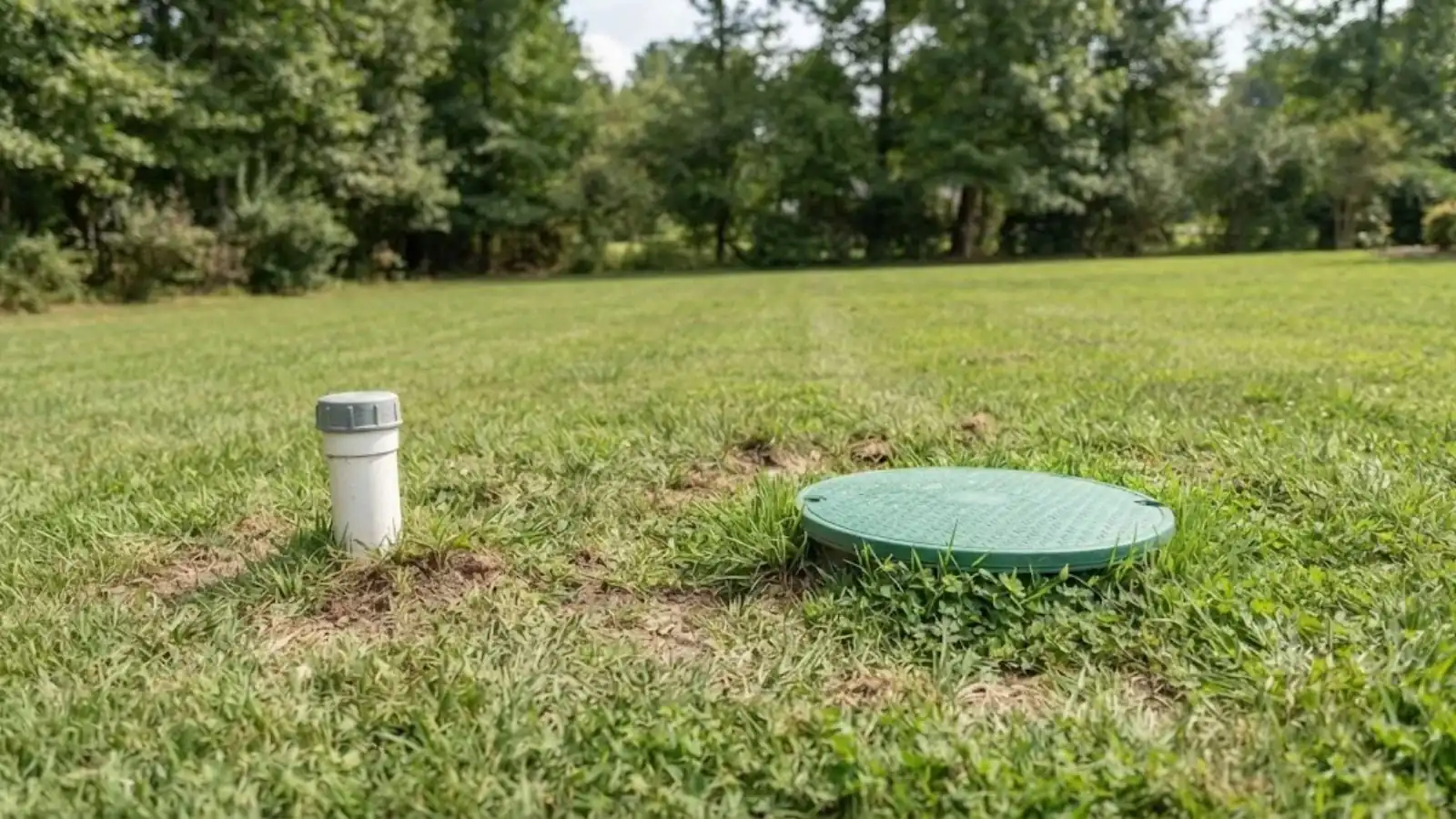
The Answer Changes The Repair
About half of North Carolina homes use septic systems, according to the state's public health department. That means many houses in Guilford, Randolph, Davidson and Forsyth counties do not connect to a sewer main. If you are on septic, a slow drain can mean a full tank, and the fix differs from a clogged city line. A utility bill, a walk around the yard and a call to the county usually settle the question.
If you rent, ask the landlord or property manager which system serves the unit. Either way, tell the plumber what you found so the right equipment is sent on the first trip, whether that is a cable machine or a pump truck.
Clues That Point To Septic Or City Sewer
One clue is a hint. Two or three together are a good answer.
| Clue | Suggests septic | Suggests city sewer |
|---|---|---|
| Utility bill | Water charge only, or a well with no bill | A sewer or wastewater charge appears |
| Yard | A buried lid or manhole cover, a patch of lush grass | Nothing buried near the house |
| Street | No sewer manholes along the road | Manholes along the street |
| Cleanout | May have a house cleanout leading to a tank | A cleanout near the property line or street |
| County records | A septic permit and layout on file | No septic permit on file |
How To Confirm
The state health department suggests asking your local health department for a copy of your septic permit and system layout. In Guilford County, the Environmental Health Division keeps those records. In Randolph, Davidson and Forsyth counties, the equivalent county office does. A permit with a tank size and drainfield diagram settles the question.
A water or sewer bill is the quickest check. If your property gets a combined water and sewer bill from a city or town such as Jamestown, which built its own municipal sewer system after its 1947 rechartering, you are probably on the sewer.
Not Sure What You Have?
Describe the problem on the call. A plumber can tell a septic issue from a sewer blockage by the symptoms.
What To Do If You Discover You Are On Septic
Septic systems reward routine care and punish neglect.
- 1
Request your septic permit and layout from the county environmental health office.
- 2
Mark the tank and drainfield locations and keep vehicles off them.
- 3
Pump the tank every three to five years, and ask the pumper to check both sides of the tank.
- 4
Keep grease, chemicals and water softener backwash out of the system, and limit garbage disposal use.
- 5
Learn the warning signs: slow drains everywhere, gurgling, odors and soggy ground.
Septic Versus Sewer Problems
Slow drains in every fixture in a sewer home usually mean the main line is blocked, which emergency drain cleaning clears. In a septic home, the same symptom can mean a full tank or a blocked outlet filter, and professional septic tank pumping is the first step.
Broken pipes are different again. A cracked pipe between a house and a tank, or between a house and the street, belongs under sewer repair either way.
Septic Is Common Just Outside The Towns
Trinity and the rural parts of southern Randolph County have many septic properties, while towns such as Jamestown have municipal sewer. Archdale's history shows the pattern: heavy clay soil was one reason residents wanted public water and sewer. Property just outside a town's sewer line is the most likely to be on septic. Homeowners in Trinity will find a table on that page for sorting city sewer, septic and well setups.
Where To Look For Records
Closing documents, the deed and the survey or plat often mention a septic system or a sewer connection. A previous owner or a long-time neighbor may know where the tank is. Home inspection reports from a past sale sometimes include a sketch.
The county environmental health office is the most reliable source. Ask for the septic permit and layout by parcel address, and bring the owner's name. Older systems can predate modern permitting, so a missing record does not prove there is no system.
Finding A Tank When The Records Are Missing
A pumper or plumber can locate a tank by tracing the sewer line from the house with a camera and locator, or by probing the ground along the line's likely path. Tanks sit a few feet below grade, often in line with where the main drain exits the foundation.
Once found, have the lids exposed or raised with risers so future access is easy. Mark the spot, record the dimensions and keep the information with your house papers.
Misreadings That Send People The Wrong Way
A common mistake is assuming a house inside a town is on sewer. Some parcels inside limits were never connected. Another is assuming a yard cleanout means a city line, when it may lead to a tank. A third is relying on a neighbor, since adjacent lots can have different systems.
A utility bill, a county permit and a plumber's camera are better than assumptions. When you have the answer, write it down with the date and keep it with your house papers.
Write It Down
Once you know which system you have, record it along with the date, the source of the answer and any records you obtained. Add the tank size and location if you are on septic, and the cleanout location either way.
That one page helps every plumber, pumper and future buyer. It also saves you from repeating the detective work the next time something backs up.
Septic And Sewer Questions
Check for a sewer charge on your bill, a buried lid in the yard, and a septic permit on file with the county. If there is no sewer charge and no manholes in the street, septic is likely.
From the county environmental health office that covers your parcel. It usually lists the tank size and where the drainfield sits.
Yes for house plumbing and for broken pipes. Pumping and hauling is done by a permitted septage management firm.
Every three to five years for most households, according to state and Guilford County guidance.
Yes. Slow drains and gurgling can appear in both. A plumber checks the main line and the tank to tell which it is.
Sewer or septic problem? Call now.
Call (336) 453-0472Backup Or Slow Drains?
Call for drain cleaning or septic help in High Point, Jamestown, Archdale, Trinity, Thomasville, Randleman or Greensboro.
Call (336) 453-0472