Leak Detection in High Point, NC
A meter that keeps turning, a water bill that climbs or a warm spot on the floor all point to water going somewhere. Detection tools find where without opening walls at random.
- Acoustic and thermal tools
- Pressure testing
- No random demolition
- Free estimates
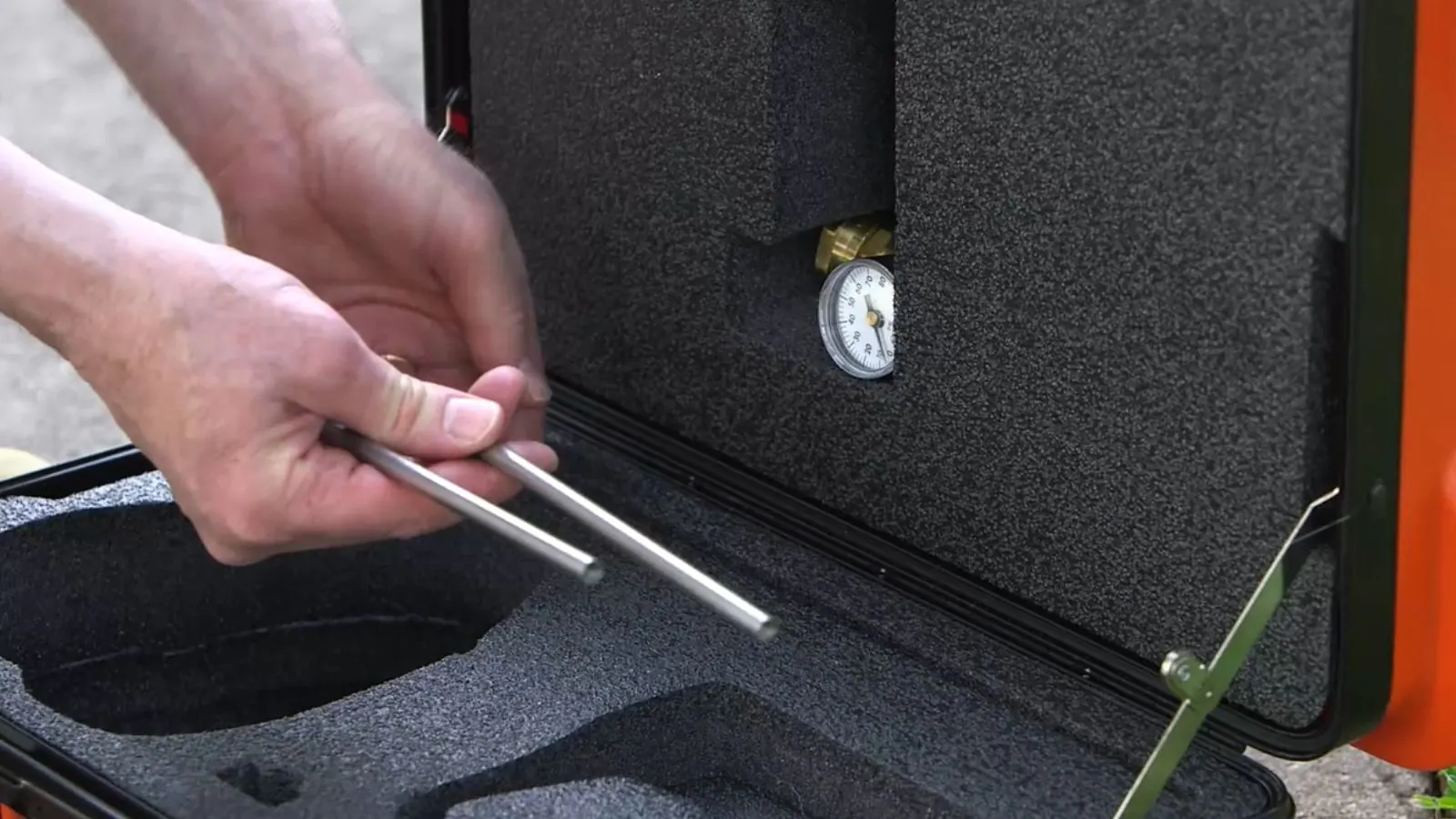
How To Check For A Hidden Leak Yourself
Two simple tests tell you whether water is escaping before you pay for anything.
- 1
Turn off every fixture and appliance that uses water, including the ice maker and the irrigation timer.
- 2
Find the water meter, usually in a box near the street, and look at the leak indicator. It is a small dial or triangle that spins when water moves.
- 3
If the dial spins with everything off, or the digits change over 30 minutes, water is leaking somewhere between the meter and the fixtures.
- 4
Next, add a few drops of food coloring to each toilet tank. If color reaches the bowl within 10 minutes without flushing, that toilet is leaking.
- 5
Compare your winter bills. For a family of four, use above 12,000 gallons a month in winter suggests a leak.
Small Leaks Add Up Quickly
According to the EPA's WaterSense program, the average household loses more than 10,000 gallons a year to leaks, and one home in ten loses 90 gallons or more every day. Fixing easily corrected leaks can trim about 10 percent from a water bill.
Those figures are for ordinary drips and running toilets. A pinhole in a pressurized line under a slab can leak much more and also damage flooring, subfloor and framing over months. Finding it early costs far less than finding it after the floor warps.
How Plumbers Locate A Hidden Leak
No single tool finds every leak. A technician picks the method based on pipe material, location and symptoms.
| Method | How it works | Best for |
|---|---|---|
| Water meter test | Isolates the house and watches the meter for flow | Confirming a leak exists |
| Pressure test | Holds pressure on a closed section and watches for a drop | Narrowing which line is leaking |
| Acoustic listening | Amplifies the sound of escaping water through floors and walls | Pressurized supply lines |
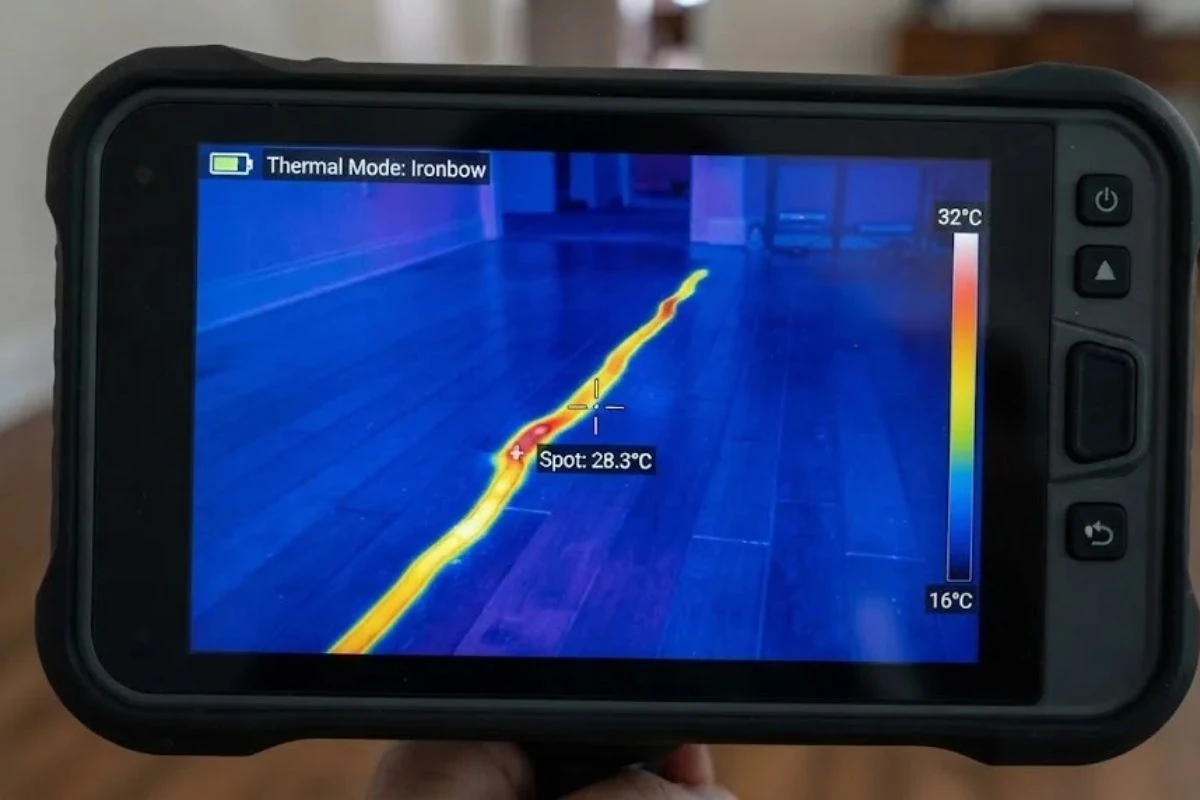
| Thermal imaging | Shows temperature differences from wet or hot-water leaks | Hot-water slab leaks and wet walls |
| Tracer gas | Fills a line with a harmless gas mix and sniffs where it escapes | Hard-to-hear leaks |
| Moisture meter | Reads dampness in drywall, wood and concrete | Mapping how far water has spread |
Meter Moving With Everything Off?
Call and tell the dispatcher what the meter does. It narrows the search.
Signs You May Have A Hidden Leak
Higher bills
Usage rises with no change in habits.
Sound of water
A faint hiss with all fixtures closed.
Warm floor area
Often a hot-water line leaking in or under a slab.
Musty smell
Dampness behind walls or under floors.
Stains and swelling
Ceiling stains, bubbling paint, warped baseboards.
Low pressure
Water escaping before it reaches the tap.
Where Leaks Hide In High Point Homes
South-side ranches built from the 1940s through the 1980s often have supply lines in or under a concrete slab, and cast-iron drains below that. A slab leak in one of these houses may show only as a warm patch or a spinning meter. When the cause is confirmed under the floor, slab leak detection covers the next step.
In mill houses near Highland Cotton Mills and in the Uptown Suburbs, galvanized supply lines corrode from the inside and pinhole at the joints. Crawlspaces hide those drips for years. Polybutylene tubing in homes from roughly 1978 to 1995 adds another leak risk. Pinpointing the leak first lets you decide between a spot repair and a full repipe project.
What Leak Detection Can And Cannot Do
Detection can
- Confirm that a leak exists
- Narrow it to a line, room or few feet
- Reduce how much wall or floor is opened
- Document the leak for an insurance claim
Detection cannot
- Find every leak on the first pass in all conditions
- Locate a leak without any water pressure on the line
- Repair the pipe by itself
- Guarantee a result in very noisy or deep installations
How A Leak Detection Visit Works
- 1
Interview
The plumber asks about the bill, the meter and the symptoms.
- 2
Test
Meter and pressure tests narrow the search to one section.
- 3
Pinpoint
Acoustic and thermal tools mark the leak on the floor or wall.
- 4
Quote
You hear the repair options and price before anything is opened.
What Affects The Cost Of Leak Detection
Free estimates for detection and repair
Detection is quoted by scope. Repair pricing follows once the leak is found. Call for your real number.
Ask your city utility billing office whether any adjustment applies after a leak is repaired. Policies vary.
Leak Detection Beyond High Point
Leak detection is also available east of High Point in Jamestown. If water has already soaked a floor or wall, restoration after water damage handles the drying.
What A Good Leak Report Should Say
A useful report names the location of the leak, the pipe it is in and the method that found it. It separates a supply leak from a drain leak, because the repairs differ. Moisture readings or photos should back up the finding.
If the leak is under a slab, behind a wall or in a yard, the report explains the access needed and which tests ruled out other lines. Some homeowner policies cover sudden water damage or the cost of finding a leak, while slow leaks are often excluded, so keep the report and photos.
What To Do While You Wait For A Visit
Close the shutoff valve to any fixture you suspect and note which sounds or stains come and go. A drip that stops when one valve is closed narrows the search to that branch. Photograph any stain with a coin or tape measure beside it, so changes over a few days are easy to see.
Do not open walls or floors yourself. A cut in the wrong place adds repair cost and removes the evidence the tools are trying to read.
Leak Detection Questions In High Point
Warm spots on the floor, the sound of running water with fixtures closed, a spinning meter and unexplained bill increases are common signs. A plumber confirms with a pressure test and acoustic or thermal tools.
The tools are noninvasive. Opening a wall or floor happens only after the leak is pinpointed, and then only at that spot.
Often, yes. Acoustic tools and thermal imaging can narrow the location, and moisture meters show how far the damage has spread.
The EPA estimates the average household loses more than 10,000 gallons a year, and about one home in ten wastes 90 gallons or more per day.
Yes. Estimates for leak detection and repair are free. The price is quoted before any work begins.
Yes. Leak detection works in rentals and multi-unit buildings. A meter test often shows whether the leak is in one unit or in shared lines, which helps decide who pays. Share the meter layout and the bill history.
A meter test and a pressure test often take an hour or two. Pinpointing a leak under a slab or in a long yard line can take longer.
Not usually. Acoustic and thermal tools narrow the location first, so any opening is small and in the right spot.
Yes. Acoustic tools and tracer methods locate leaks in buried service lines, and a pressure test on the line confirms the result before anyone digs.
Think you have a leak? Call now.
Call (336) 453-0472Water Bill Doesn't Add Up?
Call about leak detection in High Point, Jamestown, Archdale, Trinity, Thomasville, Randleman and Greensboro.
Call (336) 453-0472