Emergency Water Damage Restoration in High Point, NC
Extraction, drying and cleanup after a burst pipe, appliance leak or flood, started quickly because wet structure begins to deteriorate within a day or two.
- Open 24/7
- Extraction and structural drying
- Moisture mapping
- Insurance documentation
Why The First 24 To 48 Hours Matter
Water damage restoration is the work of removing standing water, drying wet building materials and cleaning what can be saved. The U.S. Environmental Protection Agency advises that wet materials be dried within 24 to 48 hours to prevent mold growth, which is why a morning-after phone call is already late.
Plumbing and restoration are separate jobs. A plumber stops the leak and repairs the pipe, while restoration deals with the soaked drywall, flooring and framing it left behind. This line handles the second job. If the source is still running, close the main water valve and ask about emergency burst pipe repair as well.
Three Categories Of Water Damage
The industry standard for water damage work, ANSI/IICRC S500, sorts water by how contaminated it is. The category decides what can be dried in place and what has to be removed.
| Category | Typical source | How it is handled |
|---|---|---|
| Category 1 (clean) | Supply line burst, overflowing sink with clean water | Extract and dry in place if started quickly |
| Category 2 (gray) | Washing machine or dishwasher discharge, toilet overflow without solids | Extract, clean and dry. Porous materials such as carpet padding are often removed |
| Category 3 (black) | Sewage backup, flooding from rivers or heavy rain | Remove porous materials, clean and disinfect, then dry |
Clean water can degrade to gray after 48 hours or more, which is another reason to call quickly. This page describes an industry standard. It is not a claim that this business holds a certification.
Soaked Floors Or Ceilings?
Call the water damage line before you start pulling things apart.
How Water Damage Restoration Works
- 1
Assess
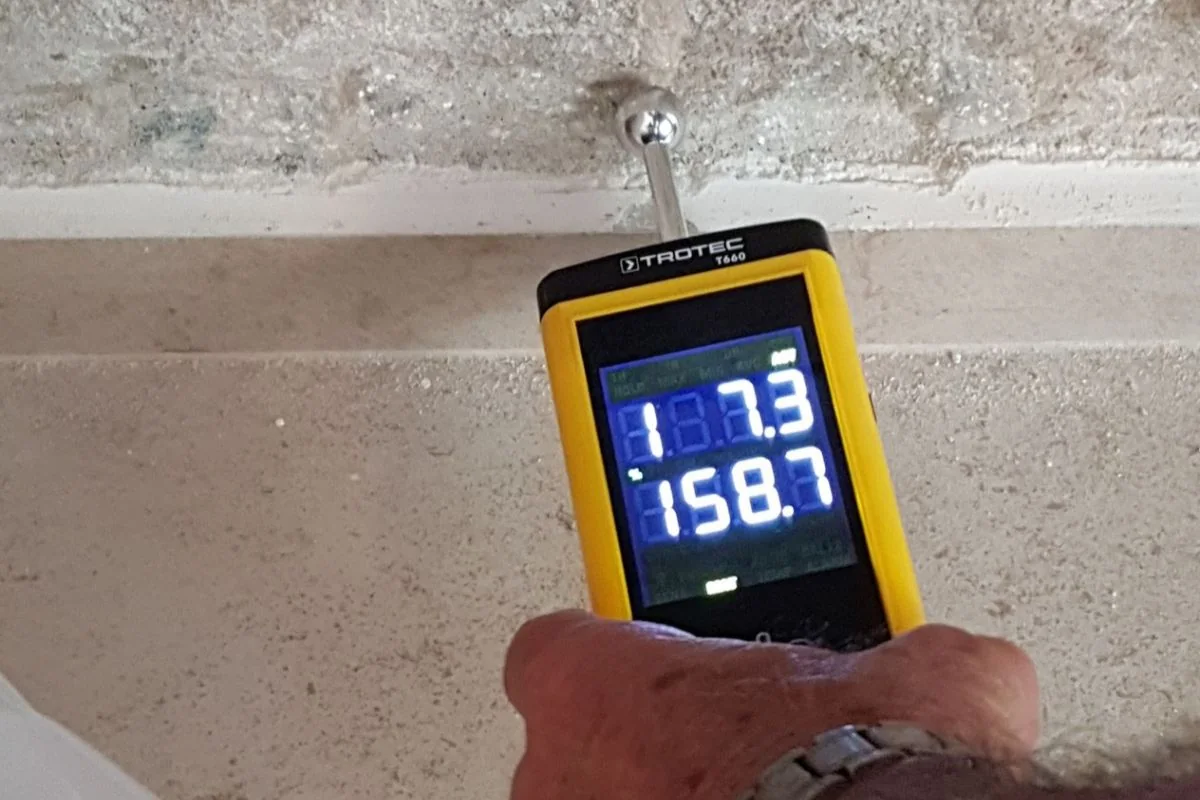
Moisture meters and a thermal camera map where water has traveled, including inside walls.
- 2
Extract
Pumps and wet vacuums remove standing water from floors and subfloors.
- 3
Dry
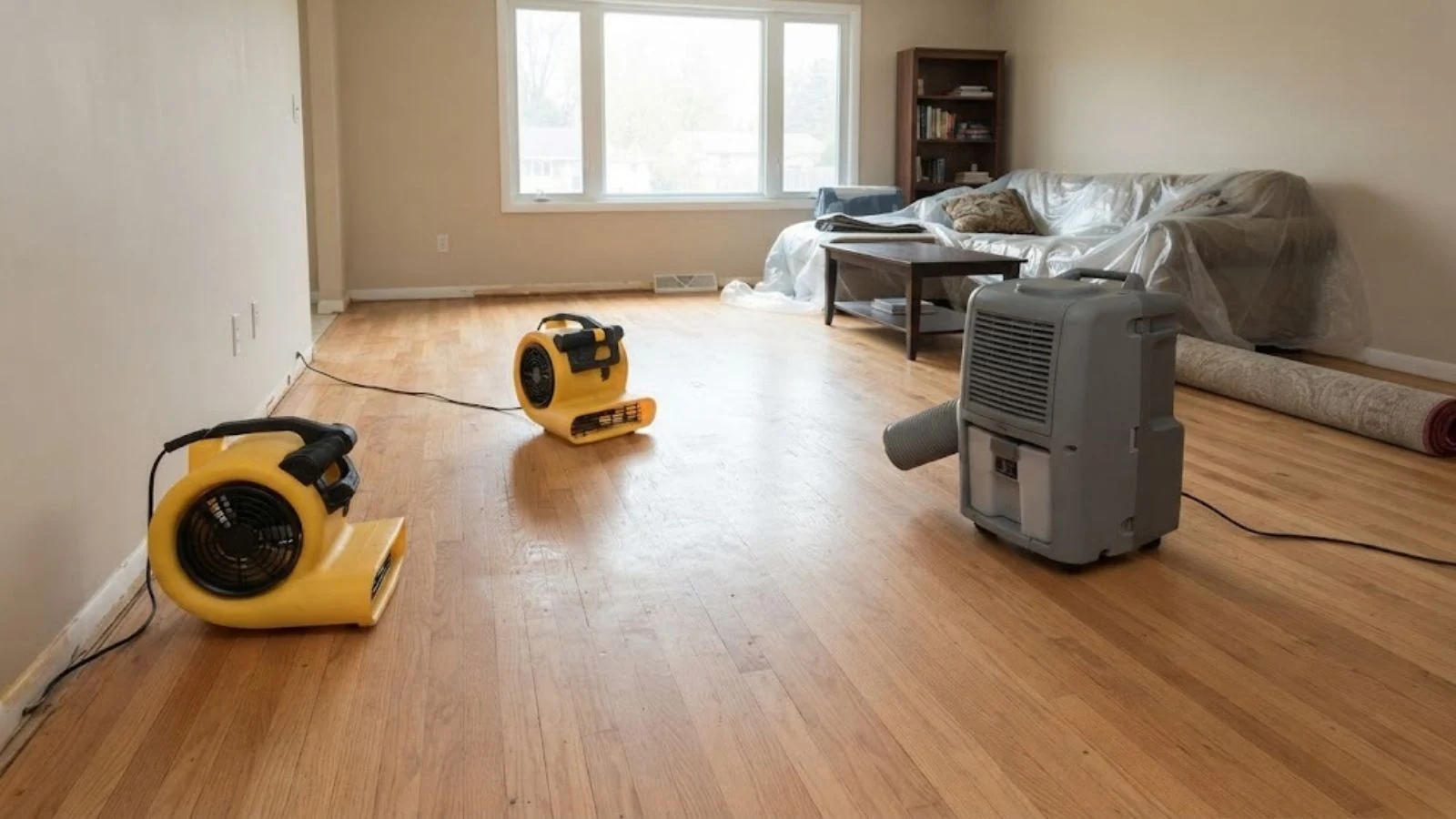
Air movers and dehumidifiers run until readings return to normal for the materials.
- 4
Document
Drying logs and photos record the work for your insurance claim.
Why Water Lingers In Piedmont Houses
High Point has a humid climate, and water dries slowly in warm, damp air with no help. Basements and crawlspaces under many local houses hold moisture, and a slab leak under a south-side ranch can spread laterally for days before it shows at a wall. Heavy rain from tropical systems can also overwhelm gutters and grading around older homes.
Mill houses near Highland Cotton Mills and Uptown Suburbs homes from 1903 through 1963 often have plaster walls and old hardwood floors over crawlspaces, and water can travel into hidden spaces beneath them. Where groundwater keeps a crawlspace wet, a sump pump treats the cause instead of the symptom. That is why moisture mapping matters more than what the surface looks like. A floor that feels dry can sit on a wet subfloor.
What To Do Before The Crew Arrives
Safety comes first. These steps protect people and keep your insurance options open.
- 1
Close the main water valve if water is still running, and stay out of rooms with water near outlets or the electrical panel.
- 2
Photograph and video the damage before moving anything, including the source of the water.
- 3
Lift small items, rugs and electronics out of the water if it is safe to do so.
- 4
Open interior doors and run fans only if the water is clean and no one has asked you to hold off.
- 5
Do not use a household vacuum on standing water or turn on ceiling fixtures under a wet ceiling.
- 6
Call your insurance company and ask what they need for a claim.
What This Service Does Not Cover
Restoration crews dry and clean. They are not the right call for diagnosing health effects of mold, which is a conversation for a physician, and testing for mold is a separate service. Rebuilding drywall, flooring and cabinets after drying is construction work, so expect a handoff to a contractor of your choice.
If you are unsure whether the damage is a plumbing leak or a drying problem, professional leak detection finds the source, and water mitigation covers the emergency steps to limit further damage. Properties in Greensboro and the other nearby towns use the same line.
What Affects The Cost Of Water Damage Restoration
Scope drives the price
A technician measures the affected area and moisture first. The scope of work is explained before it begins. Call for your real number.
Many policies cover sudden, accidental water damage but exclude slow leaks and flood events without separate flood coverage. Ask your insurer what applies.
Water Damage Restoration Questions
The EPA recommends drying wet materials within 24 to 48 hours to limit mold growth. The sooner extraction and drying start, the more of the structure can usually be saved.
No. A plumber repairs the pipe or fixture that leaked. Restoration removes the water and dries and cleans the structure. Many emergencies need both.
Many policies cover sudden and accidental water damage, such as a burst pipe, but exclude gradual leaks and flooding without a separate policy. Photograph everything and call your insurer early.
Often, if the water was clean and drying starts within a day or two. Gray or black water, or materials that have stayed wet for days, may need to be removed.
This service dries and cleans after water damage to help prevent mold. Mold testing and remediation is a separate service, and health questions should go to a physician.
Water damage restoration and water mitigation use their own line, shown on this page. Plumbing repairs use the main plumbing number on the rest of the site.
Water damage? Call the 24/7 line now.
Call (833) 521-1033Water In The House Right Now?
Call the water damage line for High Point, Jamestown, Archdale, Trinity, Thomasville, Randleman and Greensboro.
Call (833) 521-1033