Emergency Water Mitigation in High Point, NC
The first hours after a leak or flood decide how much of your home you keep. Mitigation stops the damage from spreading while the bigger repair is planned.
- Open 24/7
- Rapid water removal
- Protecting contents
- Insurance-ready photos
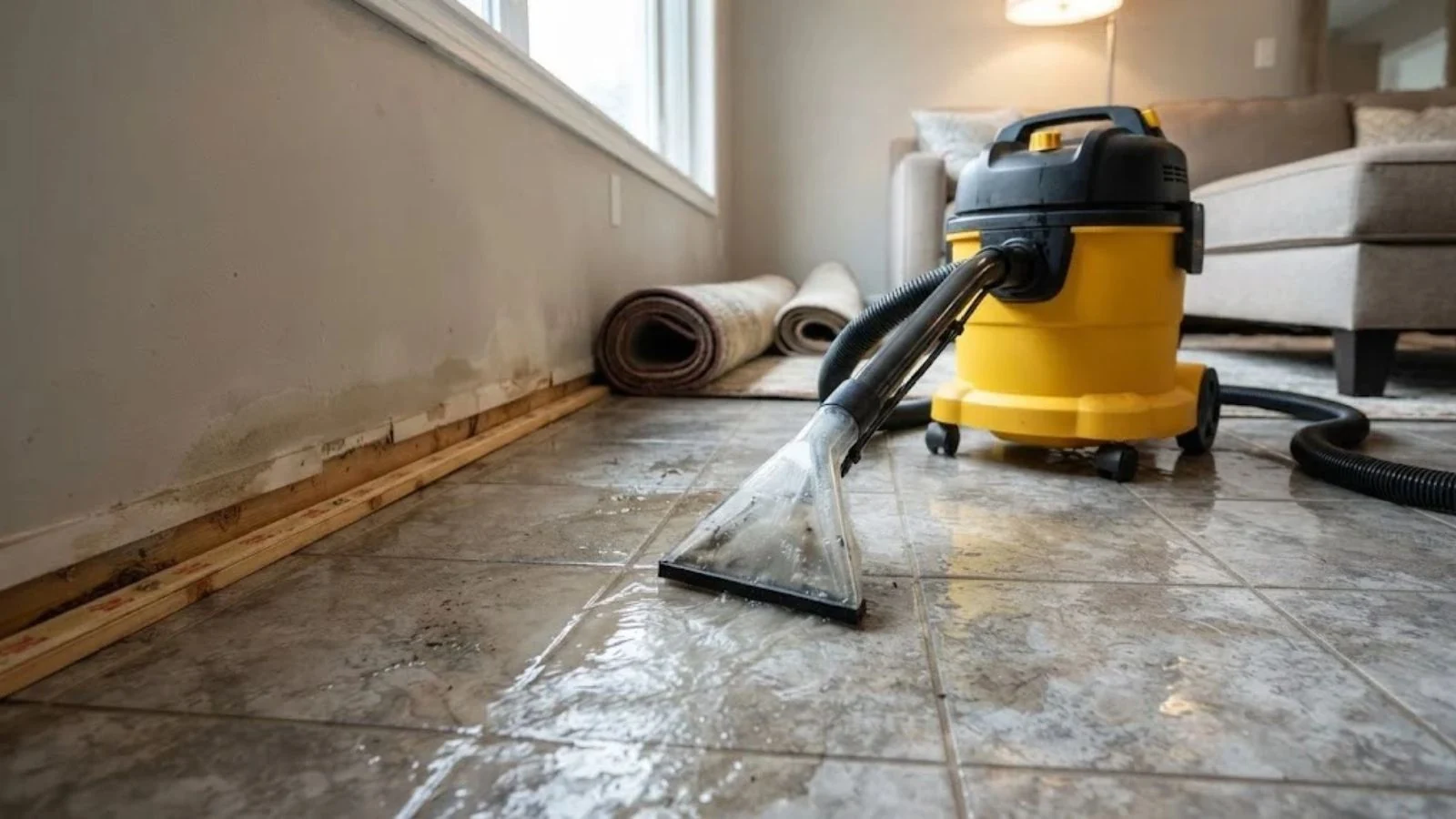
Mitigation Versus Restoration
Mitigation (the first hours)
- Stop the spread of water
- Remove standing water
- Protect furniture and belongings
- Start drying and take readings
Restoration (the full recovery)
- Dry out the whole structure
- Clean and treat affected materials
- Replace what cannot be saved
- Rebuild finishes. See water damage restoration.
Mitigation Is About Limiting The Damage
Water moves in every direction. It pulls up walls by wicking, drops through ceilings and spreads under flooring far beyond the visible wet spot. Mitigation is the set of actions taken early to slow that spread so the later repair stays smaller. Waiting for an adjuster or a convenient day can turn a floor repair into a wall and ceiling repair.
The ANSI/IICRC S500 standard for professional water damage restoration and the EPA's advice to dry wet materials within 24 to 48 hours both treat the early hours as the window that matters. This describes an industry standard and is not a claim that this business holds a certification.
Many homeowners policies also expect you to take reasonable steps to prevent further loss after damage occurs. Mitigation is how you show you did. Keep notes and receipts for every step.
Common Mitigation Actions
Each job is different, but most start with the same short list of steps.
| Action | What it does | Why it matters |
|---|---|---|
| Water extraction | Pumps and vacuums remove standing water | Cuts drying time and stops further wicking |
| Moisture mapping | Meters and thermal imaging find hidden wet areas | Shows where drying has to reach |
| Contents move-out | Furniture and valuables are lifted or relocated | Prevents staining, swelling and loss |
| Removal of ruined material | Soaked carpet padding or drywall may be cut out | Avoids trapping moisture and odors |
| Initial drying setup | Fans and dehumidifiers begin working | Starts the clock back toward normal moisture |
| Documentation | Photos and readings are recorded | Supports an insurance claim |
Don't Wait For The Adjuster
Call the 24/7 line. Mitigation usually does not need an insurer's go-ahead.
Situations Where Mitigation Cannot Wait
Water on the ceiling
Weight can bring down drywall and soak insulation.
Water in a finished basement or lower level
It spreads fast across flooring.
Hardwood floors getting wet
Cupping starts within a day or two.
Sewage or storm water
Contamination raises health concerns.
Water near the electrical panel
A safety hazard that needs care.
A vacant rental or showroom
Nobody notices until the damage is large.
What To Do In The First Hour After Water Gets In
These steps keep you safe and reduce the work needed later.
- 1
Stop the source. Close the main water valve if a pipe is leaking, or call a plumber for a burst line.
- 2
Switch off power only if the panel is dry, and never touch outlets while standing in water.
- 3
Take photos and short videos of every wet area, the source and damaged belongings.
- 4
Move small items, rugs and electronics to a dry room if it is safe.
- 5
Lift upholstered furniture off wet carpet with foil or plastic blocks under the legs.
- 6
Call this line and tell the dispatcher what is wet and how long it has been.
How A Mitigation Call Works
- 1
Call
Describe where the water came from and what is wet.
- 2
Walk-through
The technician checks moisture levels and plans the work.
- 3
Scope
You are told what will be done and what it involves.
- 4
Start
Water comes out and drying equipment goes in.
Where Water Hides In Older High Point Houses
Houses built in the Uptown Suburbs between 1903 and 1963 and the mill houses around Highland Cotton Mills often have hardwood floors over crawlspaces. Water that soaks through the floor can sit in the crawlspace insulation unseen. Moisture mapping looks there as well.
In south-side slab ranches, a supply line leak can wet the slab edge and carpet tack strips for days before it appears. If you cannot tell where the water is coming from, electronic leak detection finds the plumbing source, and burst pipe service fixes a failed line. Calls come in from Thomasville and the other towns on the map as well.
What Affects The Cost Of Water Mitigation
Scope explained before work
The technician measures first and explains what will be done and why. Call for your real number.
Mitigation is not a diagnosis of mold or a health service. Questions about mold exposure belong with a physician.
Water Mitigation Questions
It is the early work that limits damage after water enters a building: stopping the spread, removing standing water, protecting belongings and starting to dry.
Mitigation limits further damage in the first hours or days. Restoration is the full recovery that follows, including drying the whole structure and replacing damaged materials.
Usually not. Many policies expect you to take reasonable steps to prevent further damage. Photograph everything, keep receipts and tell your insurer what you are doing.
Often, if the water was clean and drying starts quickly. Materials that stay wet for days, or that were soaked with sewage, may have to be removed.
If water is still flowing, stop it at the main valve and call a plumber. For the water already in the house, call this line.
Water in the house? Call the 24/7 line.
Call (833) 521-1033Water Spreading Through The House?
Call the mitigation line for High Point, Jamestown, Archdale, Trinity, Thomasville, Randleman and Greensboro.
Call (833) 521-1033