Frozen Pipes In The Piedmont: How To Prevent And Thaw Them
Mild winters make people careless, but one hard freeze can split a pipe in an unprotected crawlspace or exterior wall.
- Sourced guidance
- High Point area
- Updated October 2026
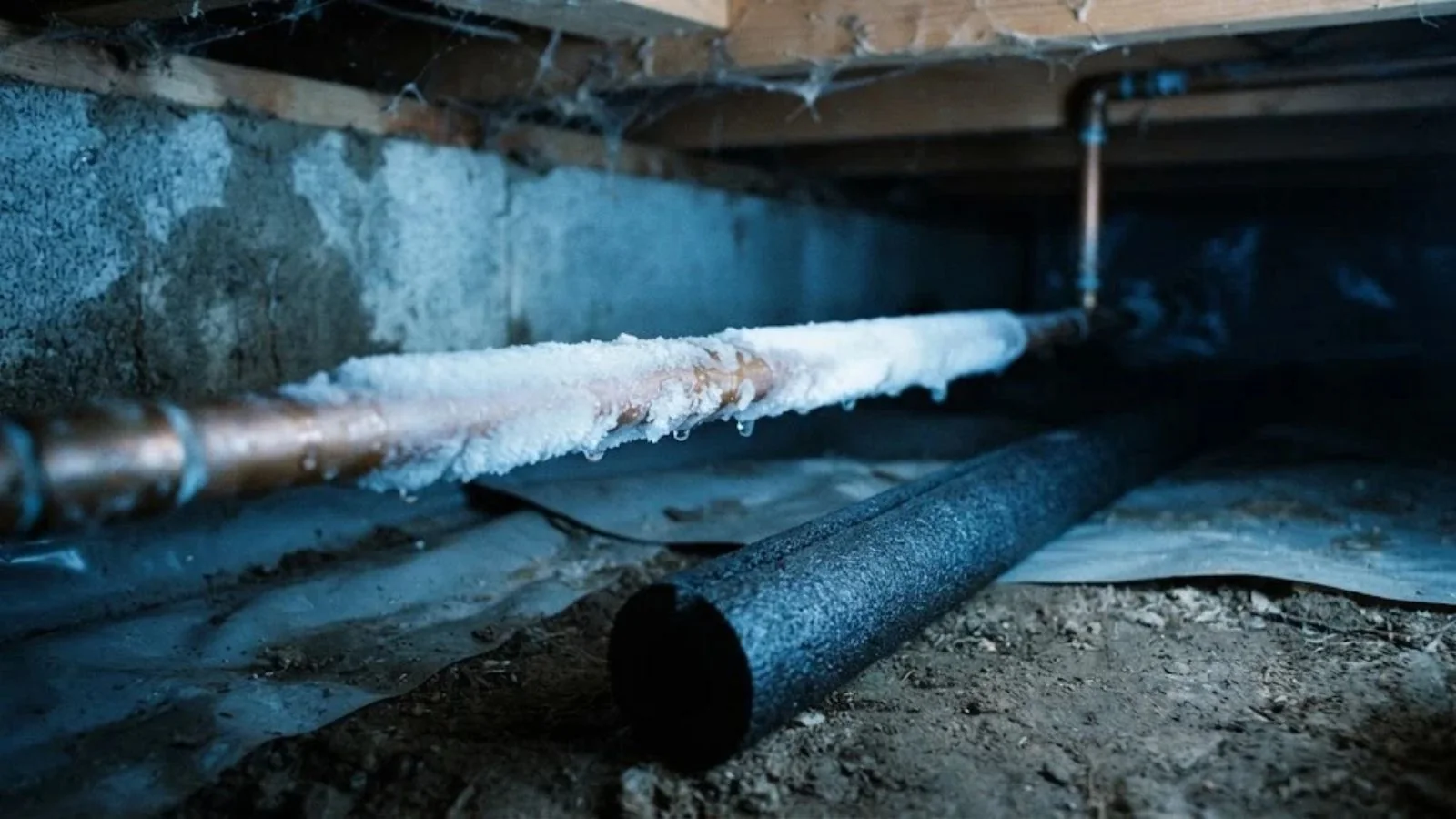
Mild Winters Leave Pipes Unprotected
The International Plumbing Code (IPC), which the NC Plumbing Code follows, says pipes in exterior walls, attics and crawlspaces must be protected from freezing by insulation, heat or both. Water expands as it freezes, and that pressure is what splits a pipe, not the ice itself.
High Point winters are mild on average, so many homes were built with pipes in unheated crawlspaces, garages and exterior walls with little insulation. When a hard freeze arrives, those pipes are the first to go.
The most useful step is to know where your exposed pipes are and protect them before the forecast turns cold. This guide covers prevention, what to do if a pipe freezes and when to call a plumber.
Where Pipes Freeze First In Local Homes
Not all pipes face the same risk.
| Location | Why it is exposed | What helps |
|---|---|---|
| Unheated crawlspace | Cold air through vents, no heat source | Close vents in winter, add pipe insulation |
| Exterior walls | Pipe sits close to the cold surface | Open cabinet doors on cold nights |
| Garage and attic | Unconditioned space | Foam sleeves, heat tape where approved |
| Outdoor spigots | Water sits in the pipe behind the faucet | Remove hoses, cover or drain |
| Vacant buildings and rentals | No heat or occupants | Keep heat on or drain the system |
What To Do Before A Hard Freeze
A few steps cost little and prevent the most damage.
- 1
Disconnect garden hoses and drain or cover outdoor spigots.
- 2
Close foundation vents and seal obvious gaps around crawlspace pipes.
- 3
Open sink cabinet doors against exterior walls so warm air reaches the pipes.
- 4
Let a faucet drip, a thin steady stream, on the coldest nights, choosing one that is fed by pipes in an exposed wall or crawlspace.
- 5
Keep the thermostat at a steady setting, even if you are away.
- 6
Locate the main shutoff valve so you can close it quickly if a pipe splits.
Pipe Already Split?
Close the main valve and call the 24/7 line.
How To Thaw A Frozen Pipe Safely
- 1
Open the faucet
Let water flow as the pipe thaws.
- 2
Warm the pipe
Use a hair dryer or warm towels, starting nearest the faucet.
- 3
Never use flame
No torch, heat gun or open flame, which can start fires or damage pipe.
- 4
Check for splits
Once water flows, look for leaks along the pipe.
Mill Houses, Crawlspaces And Vacant Units
Mill houses near Highland Cotton Mills often sit over shallow crawlspaces with exposed lines, and older Uptown Suburbs houses may have additions with poorly insulated pipes. Landlords with vacant rentals face the biggest risk, because a split pipe in an empty unit can run for days. Check unoccupied properties after the first hard freeze.
If you find a split, close the main valve and see emergency burst pipe repair. A house that has frozen more than once might need rerouted pipe, and whole-home repiping can move vulnerable lines inside the heated space.
Check For Hidden Damage
A pipe can crack while frozen and leak only when it thaws and water pressure returns. Check ceilings, crawlspace floors and the meter after any freeze. If the meter keeps moving with everything off, see the leak detection service page for next steps. Residents of Trinity and other rural parts of the area, where outbuildings and well houses also freeze, should check those too.
Beyond The Obvious Pipes
Think about every place water sits in the cold. A water heater in an unheated garage, a washing machine supply line on an exterior wall, an irrigation system with a backflow preventer above ground, a pool or outdoor shower line and a hose bib that serves the garden all deserve a look. Draining or insulating them before a freeze costs little.
A rough sketch of where supply lines run through the crawlspace and exterior walls helps. When a freeze is forecast, you know exactly where to open a cabinet, add a sleeve or let a faucet drip.
Documentation And Insurance
If a pipe splits, take photos and video before cleanup, keep receipts and tell your insurer. Policies commonly expect you to take reasonable steps to stop further damage, such as closing the main and removing standing water. Drying wet structure quickly limits mold, and water damage restoration covers that work.
Save the failed section of pipe if you can. It helps the plumber and the adjuster see why it failed. Many policies cover a sudden freeze burst and the water damage it causes, but not the cost of the pipe itself.
Vacation Homes, Rentals And Long Trips
An empty house is the most at risk. If you will be gone through a cold stretch, keep the heat on at a steady setting, ask someone to check the house daily and know where the main shutoff is. For longer absences, close the main valve and drain the lines, which a plumber can do.
Rental owners should check vacant units after the first hard freeze and leave a note with the shutoff location. A frozen line in an empty unit can run for days. A water alarm near the water heater and under sinks helps catch problems sooner.
A Short Pre-Winter Routine
Each fall, walk the house with a flashlight. Note any pipe in a crawlspace, garage, attic or exterior wall, and check the insulation. Disconnect hoses, test the main shutoff and replace any cracked foam sleeves. Make sure the crawlspace vents close.
Add a reminder to your calendar for the first cold forecast. Ten minutes of preparation beats an afternoon of cleanup. If you find a pipe that has frozen before, mention it to a plumber, since rerouting it can end the problem for good.
Frozen Pipe Questions
Pipes freeze when temperatures stay below freezing long enough, and exposed pipes in crawlspaces and exterior walls are at risk first. A short dip is less dangerous than a long cold night.
Yes, during a hard freeze. Moving water is harder to freeze, and a drip relieves pressure if ice forms.
Often, with a hair dryer or warm towels. Never use open flame, and call a plumber if you cannot reach the frozen section.
Many policies cover sudden bursts and the resulting water damage but not the pipe. Take photos and read your policy.
Keep the heat on at a steady setting, ask someone to check the house, and know where the main shutoff is.
Frozen or burst pipe? Call now.
Call (336) 453-0472Pipe Froze Or Split?
Call the 24/7 line for burst pipe repair in High Point, Jamestown, Archdale, Trinity, Thomasville, Randleman or Greensboro.
Call (336) 453-0472