Wet Crawlspace After Rain? Causes And Fixes In Piedmont Clay Soil
Water under the house is usually groundwater, but a plumbing leak can look the same. Telling them apart saves money.
- Sourced guidance
- High Point area
- Updated October 2026
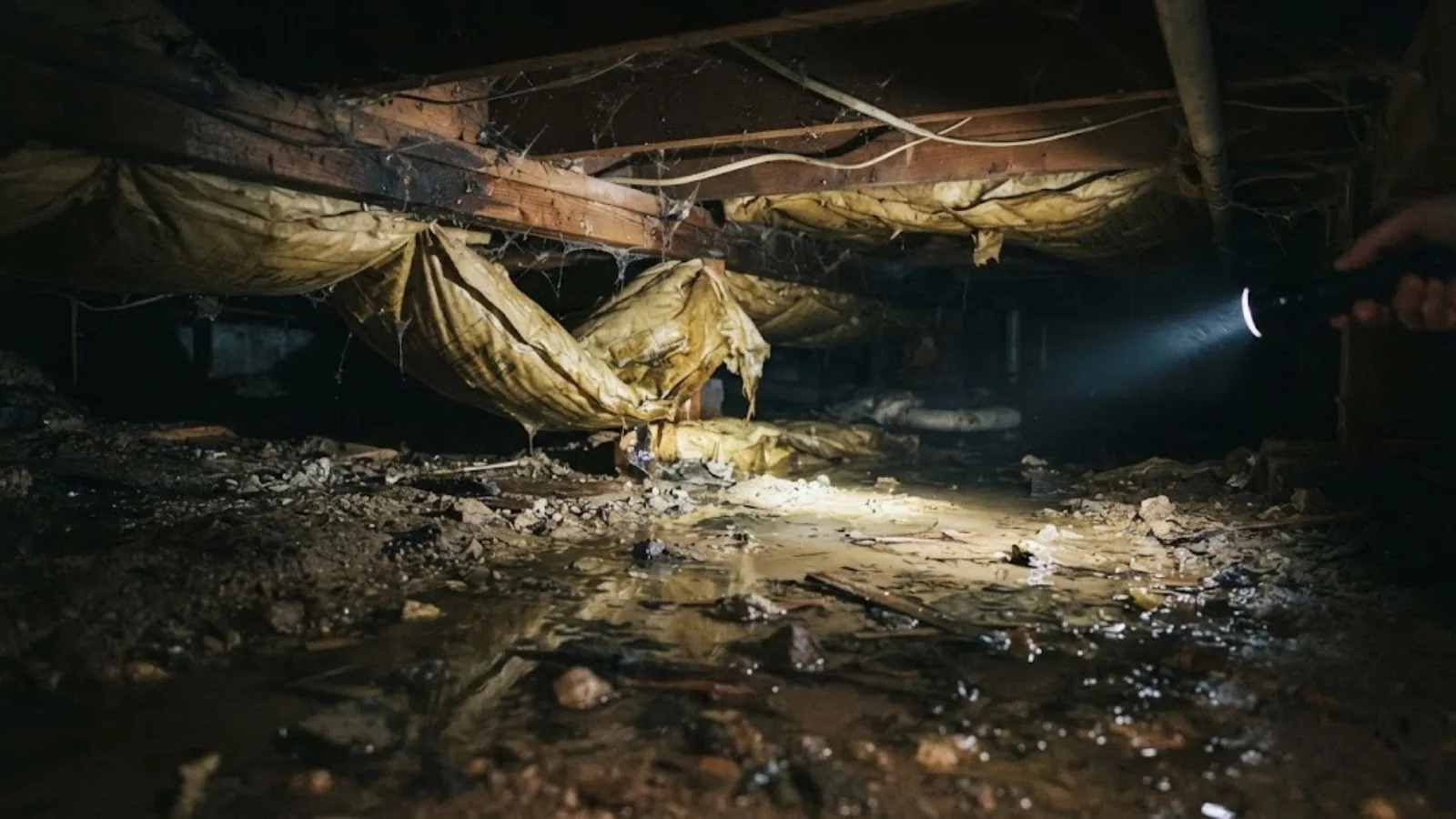
Is The Water From Rain Or From A Pipe?
Water in a crawlspace comes from three places: the ground, the roof and the plumbing. If it appears only after rain and drains slowly afterward, groundwater and roof runoff are the likely sources. If it appears in dry weather, a plumbing leak is more likely.
A quick check helps. With everything off, look at the water meter. If it moves, a pipe is leaking. If the meter is still and the water tracks the weather, the problem is drainage.
Common Causes Of A Wet Crawlspace
Most wet crawlspaces trace to a small list of causes.
| Cause | How to spot it | Typical fix |
|---|---|---|
| Poor grading | Soil slopes toward the foundation | Regrade so soil falls away from the house |
| Gutters and downspouts | Water pours at the foundation corner | Clean gutters and extend downspouts |
| High water table in clay | Water rises after long rain and drains slowly | Sump pump and drainage |
| Plumbing leak | Water appears in dry weather, meter moves | Leak detection and repair |
| Open foundation vents and no barrier | Humid air condenses, damp soil | Vapor barrier, vent management |
Water Under The House Right Now?
Call the 24/7 line. Describe how deep it is and where it is entering.
Why Clay Soil Makes It Worse
Heavy clay holds water, drains slowly and swells when wet. Archdale's local history even notes that clay-heavy ground was one reason residents wanted public water and sewer. After long rain the soil around a foundation can stay saturated for days, pushing water into the lowest point, usually the crawlspace.
According to the International Residential Code, the ground should slope away from the foundation at least six inches within the first ten feet. Many older houses in the area do not meet that, because the soil has settled or been regraded since.
What To Do When You Find Water In The Crawlspace
Crawlspaces hold wiring and ductwork, so go carefully.
- 1
Do not enter if water is near electrical wiring, outlets or the panel.
- 2
If you can do it safely from a dry spot, switch off power to the crawlspace circuits.
- 3
Check the roof gutters and downspouts for overflow at that corner of the house.
- 4
Run the meter test to rule out a plumbing leak.
- 5
Photograph the water level and any damage for insurance.
- 6
Call a plumber if the meter moves or if the water is rising.
Drainage Fixes, From Cheapest To Most Involved
Start with gutters, downspouts and grading, since they cost little and fix many problems. If water persists, a crawlspace sump pit with a pump removes what the soil sends in. A battery backup keeps it running through a storm outage. See sump pump installation and repair for how these systems work.
A plastic vapor barrier over the soil reduces humidity, and sealing or managing vents helps in some conditions. A professional should look at the whole picture before recommending a large project.
When The Water Is Not From Rain
A meter that moves, a musty smell in dry weather or a wet spot under one fixture means a leak. Leak detection finds it. Water that has soaked insulation, subfloor or framing is a separate problem for water damage cleanup and drying. Homeowners in Archdale and nearby clay-soil areas see both causes, so it is worth checking each.
Why A Damp Crawlspace Affects The Rest Of The House
Air from a crawlspace rises into the living space through gaps around pipes, ducts and floors. A damp crawlspace can bring humidity, musty odors and mold spores upstairs. Wet insulation loses its value and can sag, and framing and subfloor stay damp and can rot.
Plumbers and drying contractors do not diagnose health effects. If you worry about mold or air quality, a physician or an indoor air specialist is the right person to ask.
Gutters, Downspouts And Grading In Detail
Clean gutters in spring and fall, and make sure downspouts discharge several feet from the foundation, on splash blocks or extensions that slope away. A downspout that dumps at the corner of the house is one of the most common causes of a wet crawlspace.
Check the soil along the foundation. If it has settled so water runs toward the house, adding compacted fill and restoring the slope costs little compared with a pump and a repair. Mulch and planting beds should not trap water against the wall.
Questions To Ask Before Paying For Crawlspace Work
Large crawlspace projects, such as encapsulation or full drainage systems, can be expensive. Ask what problem each step solves and why. Ask for written scope, warranty terms and references you can contact. Be cautious of anyone who recommends the largest project without checking gutters, grading and plumbing first.
A plumber can rule a leak in or out and install a sump pit and pump. Other trades handle grading, gutters and vapor barriers. Matching the right trade to the cause saves money.
Start With The Cheap Fixes
Work from the simplest cause to the most complex. Clean gutters, extend downspouts, correct the grade and check for plumbing leaks. If water still collects, add a sump pit and pump, and only then consider larger projects.
Keep a record of rainfall, water depth and what you changed. It shows whether each step worked and helps a contractor recommend the next one.
When Crawlspaces Are Wettest In The Piedmont
Crawlspaces are often wettest after long spring rains and after the remnants of late-summer tropical systems. Winter rains on saturated ground also push water toward foundations. A pump and gutter check in March and again in August is a good routine.
Wet Crawlspace Questions
Clay soil drains slowly, so heavy rain can raise the water table around the foundation. Poor grading and short downspouts add to it.
If water collects there regularly, a sump pit and pump are the usual solution. A plumber can look at the drainage first.
Yes. Persistent moisture encourages mold and rot in insulation and wood. The EPA advises drying wet materials within 24 to 48 hours.
A plumbing leak runs in dry weather and moves the meter. Groundwater follows rain and the meter stays still.
It reduces humidity and moisture from the soil, but it does not remove standing water. Drainage and a pump are separate fixes.
Crawlspace flooding? Call the 24/7 line.
Call (336) 453-0472Water Under The House?
Call for sump pump or leak help in High Point, Jamestown, Archdale, Trinity, Thomasville, Randleman or Greensboro.
Call (336) 453-0472