Sewer Line Replacement in High Point, NC
When a sewer lateral has collapsed, sagged or failed in too many places to repair, replacing the full run is the lasting answer.
- Trenchless and open-trench
- Camera-verified scope
- Free replacement estimates
- Price quoted first
Repair Or Replace The Sewer Line
Repair is enough when
- The camera shows one cracked or offset section
- The rest of the pipe is round and in line
- Roots entered at a single joint
- The pipe material is still sound
Replace when
- The pipe has collapsed or belly-sagged for a long stretch
- Cracks or open joints repeat along the line
- The material is failing, such as Orangeburg or crushed clay
- Repairs keep adding up
What A Full Replacement Fixes
Replacement swaps the entire run from the house to the connection with the municipal main or septic tank. New plastic pipe has smooth walls, tight joints and a continuous slope, which stops root intrusion and reduces clogs. It also removes the guesswork of repeated spot repairs on pipe that is failing everywhere.
It is a bigger project than repair, and the camera inspection is what tells you whether you need it. If the video shows only a short problem, ask about sewer repair first. If it shows a broken line from end to end, replacement is the honest recommendation.
Two Ways To Replace A Sewer Line
The route depends on the line, the yard and the budget.
| Method | How it works | Fits when |
|---|---|---|
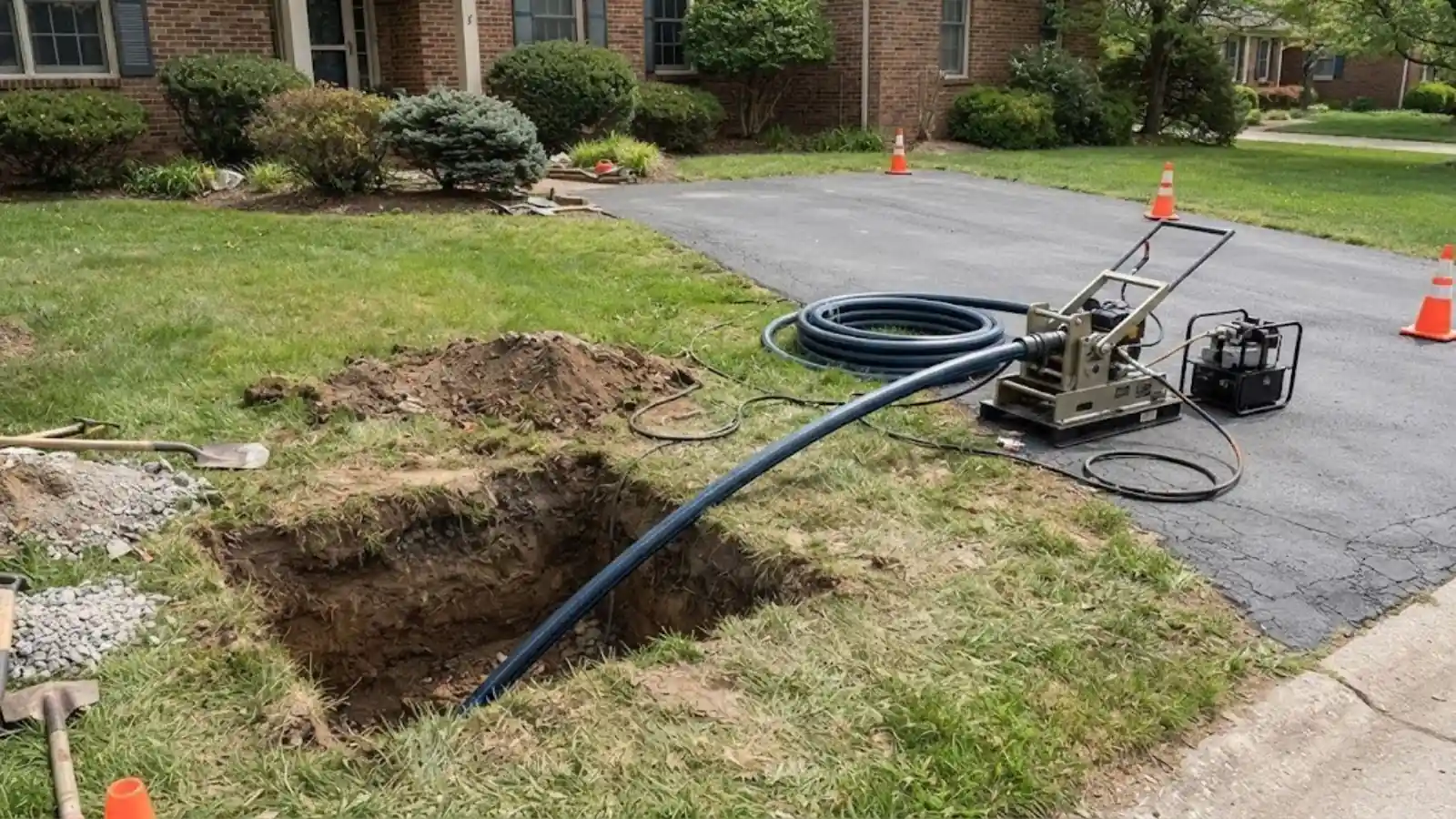
| Trenchless pipe bursting | A bursting head pulls new pipe through the old line, breaking it outward | The old pipe is mostly in line and ends are accessible |
| Open-trench replacement | The ground is dug along the line and the old pipe is removed | The pipe is badly offset, deeply sagged or under open yard |
| Partial replacement | Only the worst section is replaced and tied into sound pipe | Damage is limited and the rest of the pipe is in good shape |
Camera Says Replace?
Call for a free replacement estimate. Bring the video if you have it.
What Gets Replaced In Older High Point Streets
Clay tile laterals are common under houses built before the 1960s, with roots working into their many joints. Some mid-century houses have bituminized fiber pipe, which softens and collapses over time. Ranches built from the 1940s through the 1980s may have cast iron under the slab, which rusts through eventually.
Emerywood's old trees and the Uptown Suburbs' mature landscaping make trenchless replacement attractive there. It can preserve a historic yard that open-trench would tear up. A mill house near Highland Cotton Mills often has a short run to a nearby main, which can keep the job simple.
How A Replacement Project Goes
- 1
Camera and locate
The scope is confirmed and the line is mapped.
- 2
Quote and permit
You approve a written price, and permits are arranged where needed.
- 3
Replace
The old line is removed or burst, and new pipe is installed with proper slope.
- 4
Inspect and restore
Inspections are completed, the line is camera-checked and the ground is restored.
What The Plumbing Code Expects
The NC Plumbing Code is based on the International Plumbing Code (IPC). Drain lines need a continuous downward slope, commonly one-eighth to one-quarter of an inch per foot depending on pipe size, and cleanouts at accessible intervals. NC811 must be called before digging, and an inspection is usually required before the trench is covered.
A new cleanout is worth installing if the old line had none. It costs little during replacement and saves money every time the line needs service later.
What Affects Sewer Line Replacement Cost
Free replacement estimates
A camera report sets the scope, and the price is written before work begins. Call for your real number.
Homeowners policies often exclude wear and root damage on sewer lines. Check for a sewer line or service line endorsement.
Related Sewer Work
Routine blockages are a job for drain cleaning service, and recurring grease or root problems on sound pipe may be solved by high-pressure water jetting. Replacement quotes are available in Trinity and the other towns on the service map.
Getting Ready For A Replacement
Buried utilities are marked before anyone digs. In North Carolina the NC811 service marks public utility lines, and the call is made ahead of excavation. Private lines such as irrigation, a shed circuit or a well line are usually not marked, so tell the crew what you know.
Plan for access and for water. Trenchless work needs a small pit at each end, while open-cut work needs a trench along the route. The household usually has no sewer service while the old line is out, so ask how long that window is.
What The New Line Is Made Of
Most residential replacements use PVC or a similar plastic pipe. It resists corrosion and roots when the joints are sealed and the pipe is bedded and sloped correctly. The old cast iron and clay lines it replaces are what fail in many older neighborhoods.
Ask which material and which diameter are being installed, and whether a cleanout is added. A new cleanout at the house makes every later camera check and cleaning easier.
Testing, Footage And Restoring The Yard
Expect a test before the site is restored. A camera pass and a water or air test show that the joints hold and the slope is right. Ask for a copy of the final footage and keep it with the house records.
Restoration depends on the method. Trenchless work leaves two small patches, while open-cut work leaves a trench to backfill, compact and reseed or repave. Ask who restores the lawn or driveway and when.
How To Compare Written Estimates
Compare estimates on scope, not only on price. Check the length of pipe, the method, the pipe material, the restoration included and whether the permit and inspection are in the price. A lower bid that leaves out restoration or the permit is not a lower price.
Ask how the crew handles a surprise, such as a second break or a mass of roots that the camera did not show. The estimate should say whether a change in scope is quoted before extra work begins.
Sewer Line Replacement Questions
When the pipe has collapsed or sagged over a long stretch, cracks and joint failures repeat along the line, or the material is failing and repairs keep adding up.
A method that pulls new pipe through the old line while breaking the old pipe outward. It needs small pits at the ends instead of a long trench.
A typical residential line often takes a few days from digging to restoration, longer for deep or complicated runs. The plumber will give a schedule with the quote.
Most replacements need a permit and an inspection. The plumber should confirm the requirement with the local inspections office.
New smooth pipe with tight joints and the correct slope removes the usual causes, such as roots and sags. Grease and wipes can still clog any line.
A trenchless replacement is often a one to two day job, while an open-cut replacement on a long run can take longer. The written estimate states the expected duration for your line.
Trenchless work limits digging to the entry and exit pits. Open-cut work opens a trench along the line, so ask how the lawn, driveway and trees will be handled.
Sewer replacement generally needs a permit and an inspection by the local authority. The plumber confirms the process for your address and schedules the inspection.
Usually yes, though toilets and drains may be out of service for part of the job. Ask for the expected outage window and plan around it.
Need a replacement quote? Call now.
Call (336) 453-0472Sewer Line Beyond Repair?
Call about sewer line replacement in High Point, Jamestown, Archdale, Trinity, Thomasville, Randleman and Greensboro.
Call (336) 453-0472