Tree Roots And Sewer Lines: What Triad Homeowners Should Know
Roots do not break healthy pipes. They find the small cracks and loose joints in old ones, then grow until the line clogs.
- Sourced guidance
- High Point area
- Updated October 2026
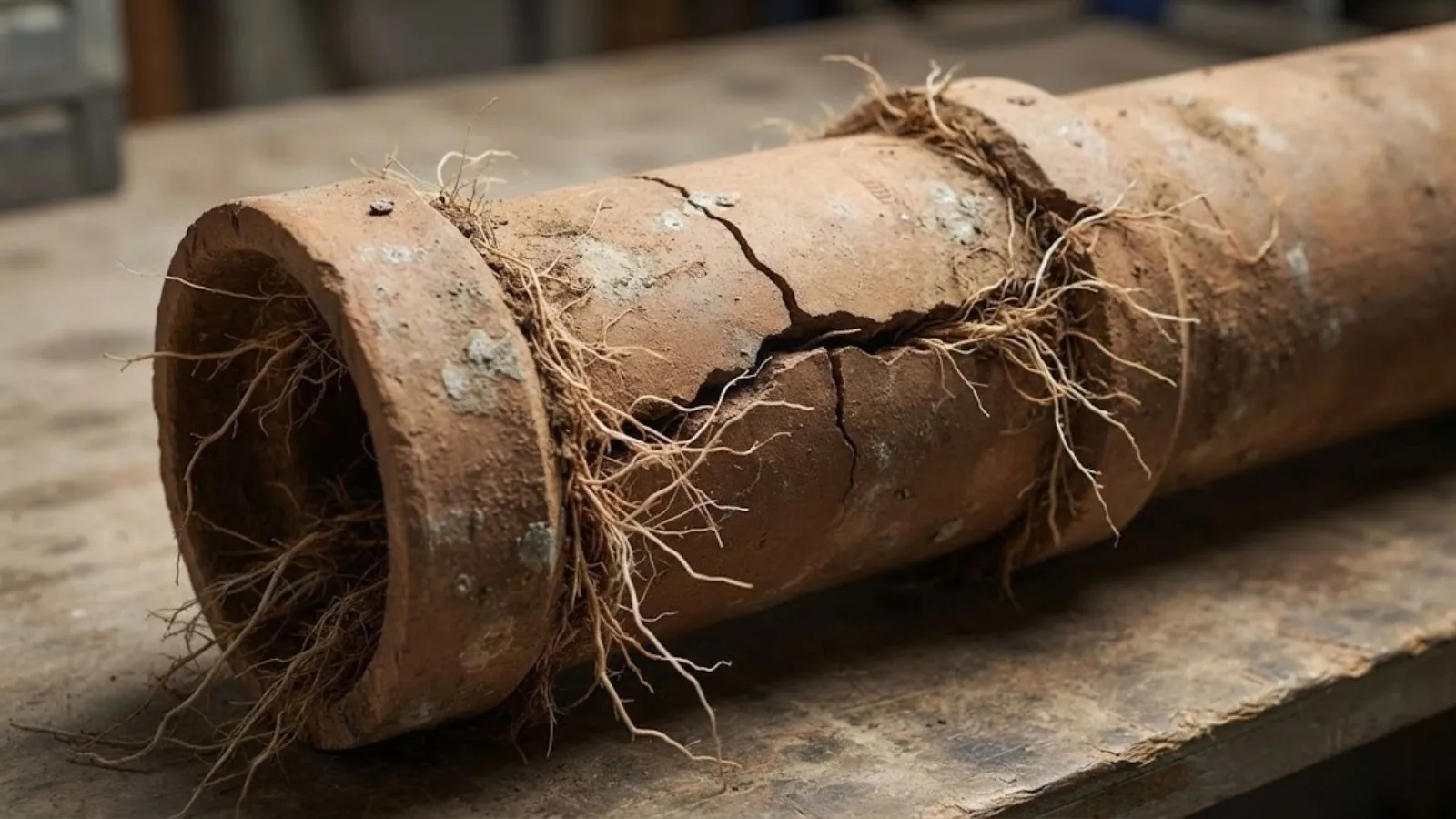
Roots Look For Water And Find Your Pipe
A sewer line carries warm, nutrient-rich water, and that makes it attractive to roots. Roots enter through tiny cracks, loose joints or poor connections, then grow inside the pipe, catching paper and waste. Over months the line narrows and slows, until a clog appears.
The fix depends on the pipe. In sound pipe, cutting or jetting the roots may work for a year or two. In clay or cracked pipe, the roots will return until the opening is repaired. A camera inspection shows which situation you have.
Signs Roots Are In Your Sewer Line
Gurgling toilets
Air pushed back by a restriction.
Slow drains in several fixtures
The main line is narrowing.
Repeat clogs every few months
Roots regrow after cabling.
Sewage smell outside
A crack is leaking at the roots.
Greener grass over the line
Leaking wastewater feeds the lawn.
Sinkholes or soft ground
Soil washing into a broken pipe.
Trees And Plants Known For Aggressive Roots
Any tree can send roots toward a pipe, but some species are more notorious.
| Tree or plant | Why it is a risk | Better choice near pipes |
|---|---|---|
| Willow | Seeks water aggressively, fast-growing roots | Plant far from sewer lines |
| Silver maple | Shallow, widespread roots | Choose slower-growing species |
| Poplar and sweetgum | Large, fast-spreading root systems | Keep distance from the line |
| Large oaks | Big roots can lift and shift pipe | Leave space and monitor |
| Shrubs with fibrous roots | Fine roots enter joints readily | Plant away from cleanouts |
Repeat Clogs?
Call and mention the history. A camera inspection shows whether roots are the cause.
Why Older Triad Neighborhoods See More Root Problems
Clay tile laterals are common under houses built before the 1960s, and each short section means another joint for roots to find. Tree-lined streets such as those in Emerywood, in the Uptown Suburbs historic district, give mature roots decades to reach the pipe. Older cast-iron lines can also scale and crack.
Jamestown's mill village and Archdale's clay-soil neighborhoods see the same pattern. In clay, soil swelling and shrinking flexes pipe joints, opening them a little more each season.
Cutting Roots Versus Fixing The Pipe
Cutting and jetting
- Clears the pipe quickly
- Costs less now
- Roots usually return in a year or two
- Best for sound pipe with minor entry
Repairing or relining
- Seals the entry points
- Costs more now
- Stops regrowth at that spot
- Best for cracked or open-joint pipe
How A Plumber Handles A Root Problem
- 1
Camera inspection
Shows roots, cracks and pipe condition.
- 2
Clear the roots
Cable or hydro jetting service removes them.
- 3
Choose a fix
Spot repair, lining or replacement for lasting results.
- 4
Plan maintenance
Schedule follow-up cleaning if roots keep returning.
Repair And Replacement Options
A line with one damaged section may be a candidate for sewer lateral repair. A line that is cracked end to end calls for sewer line replacement. Homeowners in Jamestown and other older neighborhoods use the same process.
Keeping Roots Out After The Repair
After a repair, schedule a camera check every few years for a line that has had roots. Catching new growth early is cheaper than clearing a full blockage. Keep a record of the footage so a plumber can compare it over time.
Building drains need accessible cleanouts under the International Plumbing Code (IPC), which gives a plumber a way in for cameras. When planting, keep fast-growing, water-seeking trees well away from the line and cleanout, and choose species with less aggressive roots. A root barrier can help in some places, but it needs correct installation to work.
When The Tree Belongs To Someone Else
Roots can come from a neighbor's tree or a tree in the public right-of-way. Responsibility for damage depends on the facts and local rules, and it is often not simple. If you suspect a city tree, contact the town or city public works office and ask what its process is.
Document the problem with camera footage and dates. A calm conversation with a neighbor goes a long way, since the root zone may cross property lines.
What A Good Camera Report Shows You
A camera inspection should show the whole length of the line, with notes on the distance from the cleanout to each problem. Look for cracks, offset joints, sags where water pools, roots and the pipe material. The plumber should be able to describe each finding and what it means.
Ask for the video or screenshots. If the report calls for a major repair, a second opinion is reasonable. A line with roots at a single joint needs a different repair than one with a collapsed section.
Catching Root Trouble Before A Backup
Slow drains that clear and return, a gurgle in a tub when the toilet flushes and a faint sewer smell near the cleanout all precede a full backup. Do not wait for sewage in the house to act.
If the line is clay or cast iron and the house is older, a camera check every few years is a sensible habit. It costs far less than an emergency call at night, and it shows where trouble is forming.
A Sensible Plan
If roots are in your line, get a camera inspection, clear the roots and decide on repair based on what the footage shows. Plan follow-up cleaning if the line is sound but roots recur. Keep records of each service.
If you are planting or replacing trees, choose species and locations that keep roots away from the line. A small decision in the yard can save thousands of dollars underground.
Where Roots Show Up Most In The Area
Older streets with mature canopy, such as the Uptown Suburbs and Emerywood in High Point and the mill-village streets of Jamestown, produce the most calls. Clay soil in Archdale adds movement that opens joints. Newer subdivisions with young trees tend to see problems ten to twenty years later as the trees mature.
Tree Root And Sewer Questions
Roots usually enter through existing cracks and joints, then widen them. In weak or old pipe, they can cause serious damage.
Not necessarily. Cutting the tree may not stop roots already in the pipe. Ask a plumber and an arborist before deciding.
It depends on the pipe. Some lines need clearing every year or two. Repair or replacement can end the cycle.
Some products slow regrowth, but they do not repair cracks and can harm other plants. A plumber can advise whether a product suits your system.
Often not, as wear and root intrusion are commonly excluded. Check for a sewer line endorsement.
Roots causing clogs? Call for a camera inspection.
Call (336) 453-0472Roots Clogging Your Line?
Call for sewer line help in High Point, Jamestown, Archdale, Trinity, Thomasville, Randleman or Greensboro.
Call (336) 453-0472